TL;DR
- Public white papers on fusion and plasma tech show steady but slow progress over fifty years, supercharged now by modern computing.
- Senior officials told Mark Andreessen that entire branches of physics were classified and removed from open research during the Cold War era.
- Independent analysts link glowing orb UAP reports to this hidden research through cross-referenced technical literature and observed behaviors.
- Such capabilities, if real, would be hard for the public to absorb without major disruption to energy, defense, and trust.
- Upcoming declassifications may clarify whether these orbs represent advanced human programs or something more ordinary.
Why do fusion white papers keep appearing?
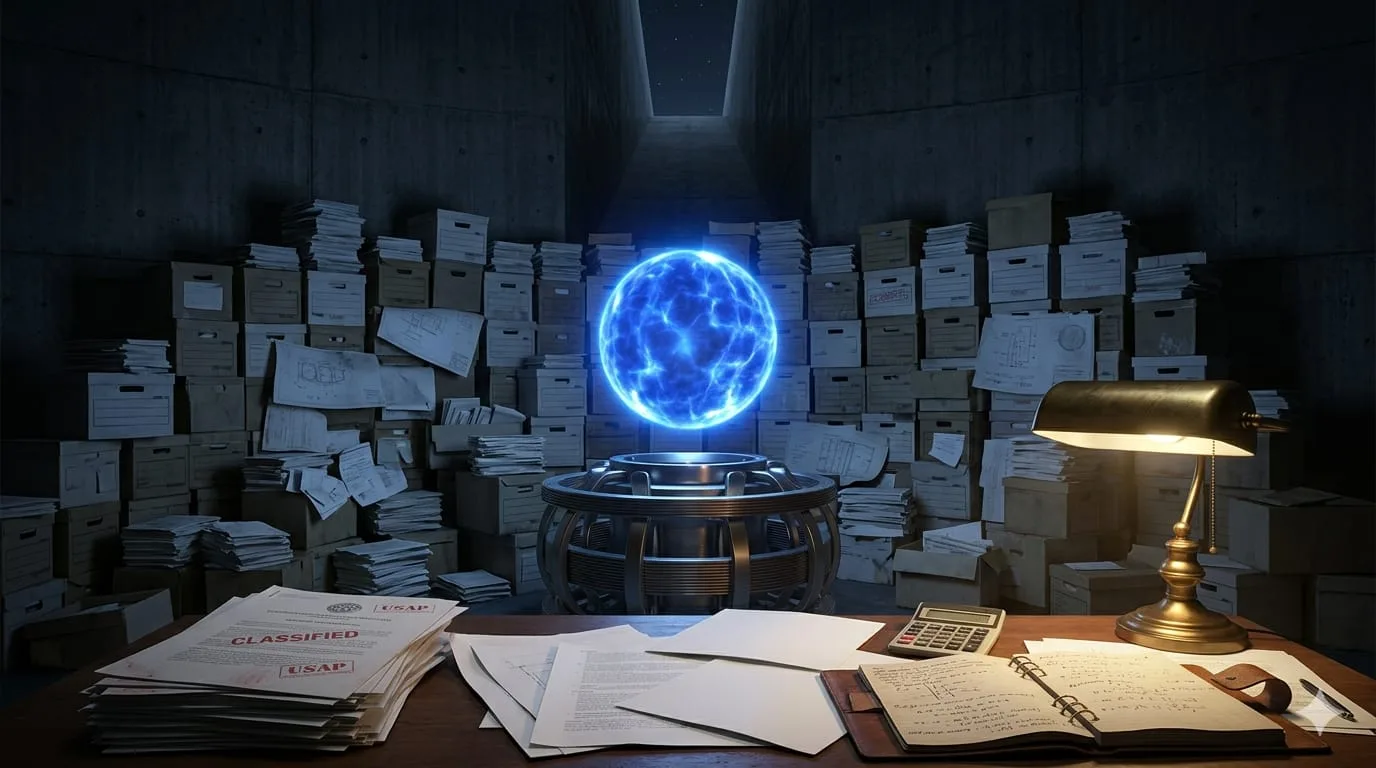
Physicists have written hundreds of reports on tokamaks, spheromaks, field-reversed configurations, and plasma propulsion since the 1950s. The documents record incremental gains in temperature, density, and confinement time. The famous triple product metric has improved by orders of magnitude. Yet commercial fusion power remains perpetually thirty years away for the public. The papers serve a practical role: they document open science, justify funding, and create a visible foundation while harder applications may move elsewhere.
Modern exascale computers and AI modeling now handle plasma turbulence that once defied simulation. Private companies use these tools to accelerate designs. Public progress is genuine. Still, the grander promises of compact systems or exotic field effects stay out of everyday view.
What did Mark Andreessen learn?
In 2024 Mark Andreessen described a direct conversation with senior government officials. They confirmed that during the Cold War entire branches of physics were classified and pulled from the open community. Those areas went dark. The same officials said they could repeat the process with sensitive AI mathematics if needed. This matches historical patterns in nuclear weapons, stealth, hypersonics, and directed energy. Public papers provide the base layer. Unacknowledged programs develop the edge.
If breakthroughs in high-beta plasmas or aneutronic systems occurred in secret, the white papers would remain as the sanitized record. Operational hardware could stay protected for strategic reasons.
Do the orbs fit this pattern?
Recent years have brought more reports of glowing orbs showing trans-medium movement, self-contained luminosity, and group coordination. Analysts such as Ashton Forbes connect these observations to decades of declassified plasma literature. They examine behaviors against papers on plasma focus devices and propulsion concepts. Individual clips can be ambiguous: drones, balloons, or sensor artifacts. Layered together with the classification precedent, the case becomes more coherent. These could represent occasional leaks from programs that achieved functional plasma systems far beyond public acknowledgment. Skepticism remains essential. Extraordinary claims still need multi-sensor evidence that holds up under open review.
Why would any reveal be difficult?
Operational plasma technology with dramatic energy or field effects would reshape energy markets, defense balances, and basic assumptions about what is possible. Populations expect gradual announcements about better batteries or faster aircraft. Evidence that foundational physics has been upended in secret would challenge trust and stability. That friction explains why real disclosure tends to arrive slowly and in pieces.
What comes next?
The current push for UAP file releases, driven by executive direction and congressional pressure, offers a chance to test these ideas against data. The white papers are not pointless. They chart real, difficult work now aided by better tools. At the same time, government habits of classification make it reasonable to treat the public picture as incomplete. Human ingenuity, both open and hidden, has surprised us before. Plasma orbs in the sky may prove another example worth examining without hype or dismissal.