TL;DR
- Meta spent more than twenty years making incremental changes that turned Facebook from a simple social site into a sophisticated attention extraction system.
- The company combined behavioral psychology, algorithmic optimization, and practical features like Marketplace to keep users engaged.
- Many longtime users do not realize how deeply the platform has shaped their habits, emotions, and beliefs.
- Marketplace has become a major retention tool by pulling in users who otherwise might have left.
- Similar addictive dynamics appear across platforms, including those people switch to after leaving Facebook.
How did the trap evolve so quietly?
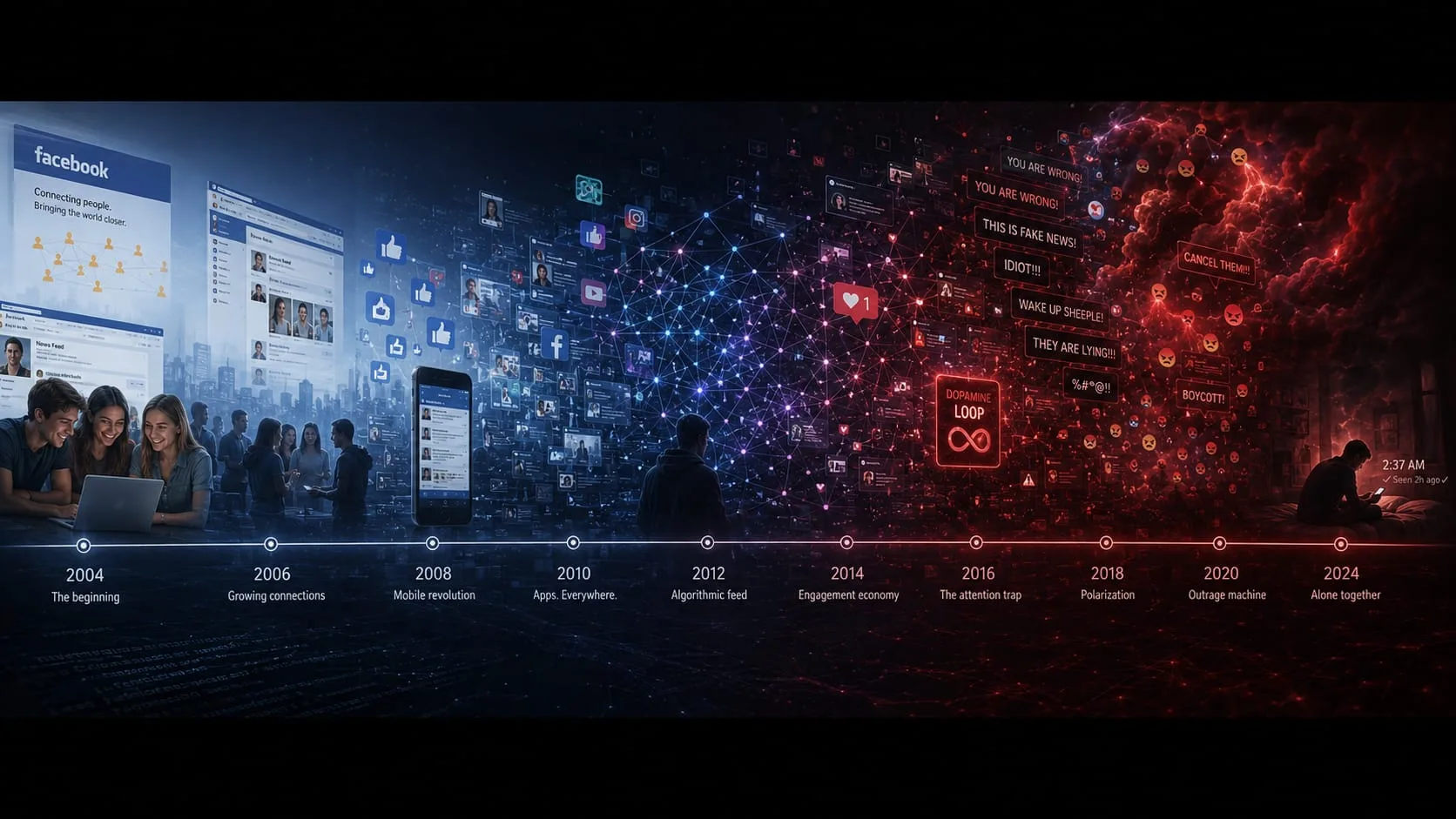
It is easy to look at today’s Facebook and assume it was always this way. The reality is more gradual. Meta did not create the current version overnight. The company made thousands of small decisions over more than twenty years that slowly replaced genuine connection with engineered engagement. I watched this happen before quitting years ago.
A recent Reddit post illustrates the change well. A user who was active from 2009 to 2012 returned after fourteen years and found the platform almost unrecognizable. What used to feel like a space for memes, classmate updates, and casual interaction had become dominated by ragebait, fake AI images, political propaganda, and hostile comment sections.
The early Facebook felt relatively innocent. Status updates and photo sharing created moments of real connection for many people. That phase gave Meta the massive user base and behavioral data it needed. From there the company refined the product step by step. More notifications. Stronger personalization. A gradual shift from chronological friend content toward material that maximized time spent on the platform.
The expanding architecture of addiction
Meta drew on established behavioral research. They implemented variable reward systems similar to those used in gambling. Likes, comments, notifications, and pull-to-refresh features created repeated dopamine responses that encouraged frequent checking.
Over time the algorithm learned that emotional and divisive content generated stronger engagement. The move toward the Discovery Engine accelerated this. It reduced emphasis on posts from actual friends and prioritized whatever provoked the strongest reactions. Internal studies, later revealed by whistleblowers, showed Meta was aware of negative effects on some users, particularly teenagers.
Marketplace added a different kind of hook. The company built a successful classifieds feature that drew users away from sites like Craigslist, eBay, and Gumtree. For many people this became the primary reason to keep the app installed. The phrase “I only use it for Marketplace” is now common. It keeps older and more practical demographics inside the ecosystem even when they dislike the rest of the feed.
The wider cost and the copycat reality
The effects extend beyond individual users. A friend of mine who remains active on Facebook has become noticeably radicalized over the years. He believes he is simply following the news. He does not appear to recognize how the algorithm has shaped his information environment and emotional responses. Millions of users likely sit in similar positions.
People often acknowledge that Facebook feels toxic but stay deeply engaged with their preferred alternative. I use X myself and it would be dishonest to pretend it is free of comparable problems. The underlying incentives of the attention economy reward outrage and division across multiple platforms.
In January 2025 Meta ended third-party fact-checking in the United States and shifted to a crowdsourced system. The company described this as a move toward greater free speech. In practice it removed barriers to the kind of content that drives engagement.
What comes next
Meta followed its own metrics wherever they led. Over two decades those metrics turned a college directory into a multi-layered system that combines social connection, commerce, and emotional stimulation. Marketplace, algorithmic feeds, and notification design all work together to keep users inside the app.
Recognizing this long evolution matters. Many of us have left one platform only to encounter similar patterns elsewhere. Real change requires honest awareness of how these systems operate on human psychology, one small interaction at a time.