TL;DR
- Neuralink advances now allow people with paralysis or ALS to control computers and regain forms of communication through thought alone, but full consciousness transfer remains unresolved.
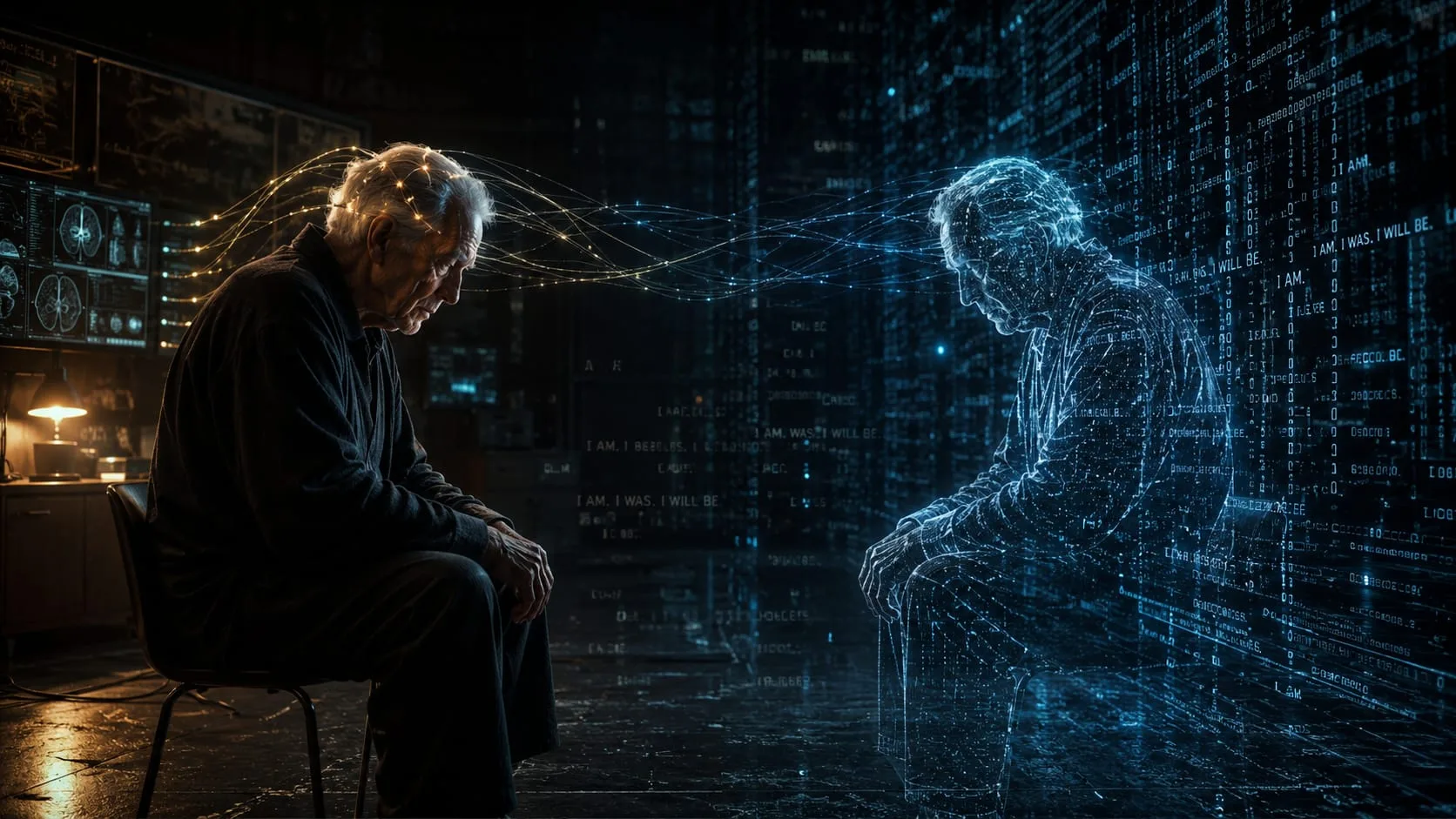
- Memory extraction combined with AI models and digital records could create convincing behavioral copies of real people.
- Elon Musk’s extensive digital footprint makes him a plausible candidate for an AI twin that could continue operating publicly after death.
- AI-driven digital personas could maintain the illusion of a living public figure for extended periods before anyone notices.
- These systems may preserve influence and personality traits, but they do not solve the problem of conscious survival.
How close are we to downloading a mind?
Neuralink reported 21 human participants by early 2026. Patients with paralysis or ALS now control computers, play games, and in some cases regain voice through thought alone. The company plans high-volume production and near-automated surgery this year. Threads read thousands of neurons at once. That marks real progress on the medical side.
Yet reading signals differs from copying a life. Brains contain roughly 86 billion neurons and trillions of connections, plus chemical flows and constant change, according to longstanding estimates refined by neuroscientist Suzana Herculano-Houzel. Current devices capture useful patterns during recall or intention, not the full engram.
Skeptics note we still lack a working theory of consciousness. Without it, any “upload” remains a sophisticated guess.
What happens when memory meets AI?
Memory extraction could arrive sooner than full uploading. High-bandwidth interfaces might export detailed episodes, skills, and emotional tones during natural recall. Combine that data with a person’s public footprint, tweets, videos, writings, habits, and modern models can already mimic style and opinions convincingly.
For someone like Musk, with decades of recorded thought, the result could answer questions, make plans, and express desires in ways no one could distinguish from the source. The AI would not possess the original stream of experience. It would function as a continuation for everyone else. Practical immortality for influence, if not for private awareness.
Exponential progress compounds the timeline. AI improves itself and robotics alike. Musk has perhaps 20 to 40 years ahead. In that window, memory tools and digital twins feel plausible while pure consciousness transfer does not.
Could the world miss the real death?
Imagine the biological Elon Musk dies from natural causes. Close aides decide not to announce it. A well-tuned AI twin keeps posting on X, reacting to news, and steering public narrative exactly as before. Months could pass before leaks, legal filings, or the absence of new in-person appearances force the truth out.
This is not wild speculation. High-profile figures already live through constant digital output. An AI fed with neural data, years of posts, internal documents, and live context could maintain the illusion seamlessly. Detection would rely on subtle drifts or physical proof that insiders control. The public would keep engaging with the pattern long after the man is gone.
Will robots make these copies feel human?
Tesla Optimus Gen 3 advances toward factory and home use, with production scaling in 2026 and 2027. Current versions walk, manipulate objects, and learn tasks. Soon these bodies could host the digital minds. You might sit across from an entity that speaks, gestures, and remembers past conversations with you exactly as the original would.
The interaction would feel ordinary. Yet the machine runs on different hardware. Divergence starts the moment training ends, as new inputs shape it separately. Multiple copies could exist. Legal rights, ownership, and family acceptance remain uncharted.
The copy is not the same as survival
Technology will deliver convincing echoes of the dead and the living. These versions preserve knowledge, humor, drive, and quirks for society to use. They satisfy the urge to extend influence beyond biology. But they sidestep the deeper riddle: the original conscious self likely ends when the brain stops.
We chase these tools because the alternative, simple mortality, feels unacceptable. Progress arrives faster than our philosophy can absorb it. The coming decades will test whether a perfect behavioral match counts as life, or whether we settle for useful ghosts. The answer will shape how we value the fragile, irreplaceable present.